Becker's Healthcare Webinar

We build the layer that translates medical records from different systems into one shared language. Our Utah work is led by Utah people, from Utah, for the communities where getting that translation right matters.
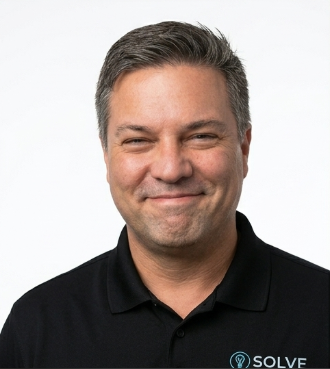
I’ve built my career around bringing together institutions that do not usually share a table—and helping them reach durable agreements: Utah’s first water bank in the Uintah Basin and an environmental-credit trading platform in Virginia.
This is that same work, closer to home. My wife Dana and I raised our family in Utah; our son leads the technical side of this project, and Dana herself is a nurse who’s spent her career in rural clinics like the ones we’re building for.
When there is no data connectivity between a rural clinic and the hospital three hours away, that’s not an abstraction to us — it’s the kind of thing that happens to people we love. That’s who this project is for.
A patient in a rural Utah town sees a local physician, gets imaging in a regional center, fills prescriptions at a pharmacy that talks to neither, and is transferred to a hospital four hours away that receives the whole history as a stack of faxed pages.
Every one of those systems holds part of the record. None of them holds it in a form the next one can read.
The result is familiar to anyone who has worked in a rural facility: hours of chart-chasing before a decision that should have taken minutes, tests repeated because the earlier result could not be found, and clinical staff spending their day on records instead of patients. The data exists. It simply is not computable.
Predoc connects data from any source including electronic health records, health information exchanges, claims, and the fax and paper channels that still carry much of rural medicine. We then normalize it into a semantic data layer: one structured, longitudinal record built on standard clinical vocabularies. Not a new system to replace what a facility already runs, but a layer underneath that makes what they already have usable.
Predoc’s Utah platform runs on Redox, the healthcare integration network already connecting roughly 91 Utah healthcare organizations — including rural hospitals — to modern data exchange. That means this project does not start by asking rural facilities to build new connections. Much of the connective tissue already exists; we make what flows through it computable.

Utah work led from Utah. The people below live and work in the communities this program is built to serve.
A rural Utah based entrepreneur, licensed attorney, and longtime consensus builder. He has built his work around bringing together people and institutions that do not usually sit at the same table—and helping them reach durable, practical agreements.
As a founder and community leader, Tyler convened Utah’s first water bank under the state’s water-banking statute, bringing together the state engineer’s office, Uintah County, Vernal City, irrigation and canal companies, and private water-right holders in the Uintah Basin. He has led similar multi-stakeholder work in Virginia, coordinating the Department of Environmental Quality, the Army Corps of Engineers, the Department of Transportation, environmental organizations, landowners, and industry around shared land-and-water infrastructure.
That is the leadership this project needs in rural Utah: a local operator who can earn trust, listen well, and help independent institutions build something useful together. Tyler leads community engagement, partner relationships, and the Rural Champions network.
Away from work, he can usually be found on a pickleball court with Dana, his wife of 33 years, or chasing grandchildren. That perspective keeps the work grounded: a clinic in Bear River having the right chart at the right time is not an abstract technology goal—it is the kind of care we need for all of our families.

Founder and chief executive of Solve Technology Solutions, LLC, a Utah company and Predoc’s Utah implementation partner. Former Chief Technology Officer of Simpl Care, a Utah HCBS provider serving Medicaid-waiver clients with direct experience running technology for a rural and underserved health services organization. Earlier in his career, as Director of Technology at BairesDev, he helped deliver technical solutions for national enterprises including Aflac, the American Red Cross, and Twist Biosciences. Solve exists to bring that enterprise-grade engineering to Main Street and Utah’s local institutions. Nate leads technical delivery, provider onboarding, the Utah implementation team, and the translation between clinical workflow and platform architecture.

Co-founder and chief medical officer of Predoc, where he leads the clinical work of connecting and organizing the nation’s healthcare data. Board-certified ophthalmologist with subspecialty training in neuro-ophthalmology, and founder and former chief executive of Eyetamins®, a consumer eye-health company acquired in 2024. For the Utah program, he brings a physician’s perspective to clinical design and helps ensure the interoperability layer presents complete, usable information in the workflows rural providers already rely on.
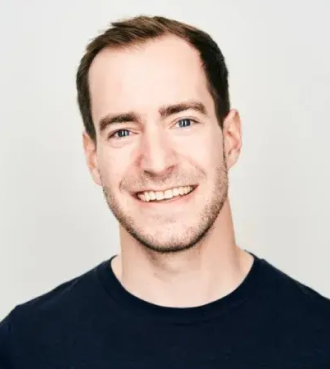
Tim will serve as the Redox Project Lead for this engagement. Tim's background is directly relevant to the technical realities rural Utah providers face: his time at Epic gave him firsthand experience with how EHR systems are actually implemented and maintained inside health systems, and his nearly 9 years at Redox spanning Sales, Implementation, Product, Partnerships, and Field Engineering have focused on solving exactly the kind of problem this program requires, translating fragmented, heterogeneous clinical data environments into a single, usable interoperability layer.
As Field CTO, Tim has led Redox's technical partnerships with Amazon, Microsoft, Google, Databricks, and Snowflake, giving him direct experience designing cloud-based, standards-driven architectures at the scale this statewide platform will require, while remaining grounded in the practical constraints that resource-limited organizations like rural clinics and Critical Access Hospitals face when adopting new technology.
Technology deployed into a rural facility without the people who work there is technology that gets ignored. So we are building the people side first, and building it to last. The network is recruited, built, and supported by our Utah-based implementation team, hired from the communities it serves.
Three champions in each independent rural hospital community, recruited locally, working to a defined role rather than an open-ended invitation to participate.
Every community holds a clinical seat, an administrative and records seat, a public or behavioral health seat, an EMS or long-term care seat, a patient or community seat, a payer seat, and a health information exchange seat — so every perspective the platform serves is represented in every community, not just statewide.
Founding visits to each community before any statewide meeting with recurring virtual community meetings standing within the program’s first 90 days. People decide whether to trust a project by meeting the people running it.
Champions elect representatives to the project’s advisory body under a written charter, and community priorities govern what gets built next.
The network is designed with Utah’s community foundations so it remains a rural health asset after any single initiative ends.
Utah’s independent rural hospitals and clinics anchor community health where the nearest alternative may be several hours away. Our work is organized around the state’s rural counties and the networks connecting them. Salt Lake, Utah, Davis, and Weber counties are shown separately as Utah’s urban core.
These nine facilities form the Utah Rural Independent Hospital Network, known as Rural 9; eight are designated Critical Access Hospitals.
We don’t take your records. We make them speak the same language.
Patient data is handled under HIPAA within a security program independently audited against SOC 2. Rural health data crosses more institutional boundaries than almost any other kind of clinical data, which makes security the foundation everything else depends on.
Redox's platform, which carries the interoperability layer for this project, holds HITRUST CSF certification and undergoes independent SOC 2 audits. That means the infrastructure underneath this program has already been through rigorous third party security review, well before a single rural clinic connects to it.

If you work in a Utah rural hospital, clinic, health department, behavioral health organization, emergency service, or community organization and the records problem is costing your people time they should be spending on patients, we would like to hear how it shows up where you are.
Predoc is the platform of MEMR Inc., a Delaware corporation. Utah implementation in partnership with Solve Technology Solutions, LLC, a Utah company.
Page last reviewed August 6, 2026